| The Sandisfield Times |
|---|
| Old and Unique Apples
Growing Them Ecologically is a Challenge |
|
by Joe Pappas, Orchard Manager, Sandisfield Orchard Published October 1, 2026 |
|
|
|
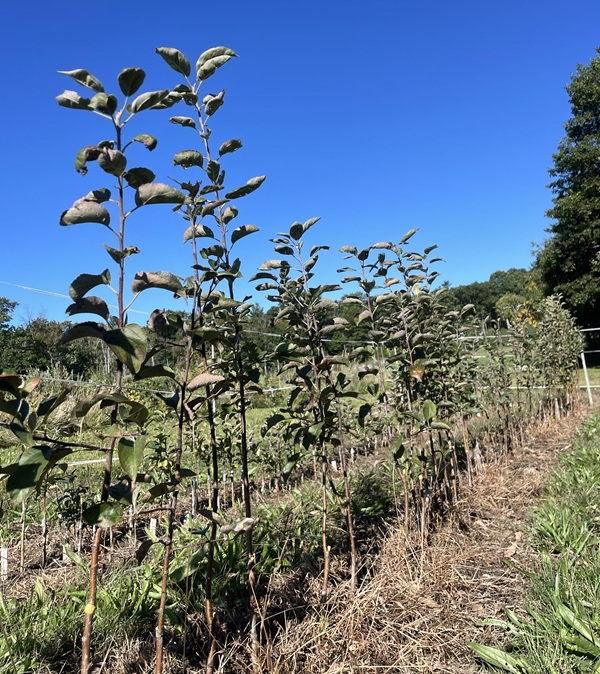
It is not widely known to consumers just how difficult it is to grow fruit in the Northeast. Here we face many challenges that our counterparts in the semi-arid apple-growing regions of the Pacific Northwest do not. Most organic fruit comes from there. But here, increased pest pressure, higher rainfall, humidity - and therefore more disease susceptibility - means a bushel of apples can cost almost twice as much to grow than out west. To support Northeast growers, Red Tomato and the IPM Institute of North America developed an ecology-based growing protocol, specific to our region, that produces marketable fruit while using the most environmentally friendly orcharding practices possible. The Eco Apple protocol includes advanced practices for ecosystem and water conservation, pollinator protection, orchard floor management, and soil health. These cover everything from mitigating soil compaction to reduxcing fuel consumption of tractors. A minimum standard of practice needs to be met, which disallows many conventional methods, while promoting more thoughtful and science-based approaches. Sandisfield Orchard has grown and certified this year's crop through the EcoApple program. We feel that growing under this program upholds our commitment to being good stewards of the land. When intervention is necessary to protect fruit quality, we use the best methods available and target specific pests while minimizing disruption to beneficial species. This approach sometimes costs more money and is more work for the grower, but we believe is the right thing to do for the sake of keeping the orchard healthy, and therefore the fruit for our customers to consume. I like to think that participating in this program acknowledges that we are not - and do not want to be - in total control of the trees. Instead, we are guiding the orchard ecosystem with minimal intervention, creating the conditions that allow it to produce the delicious fruit we all love.
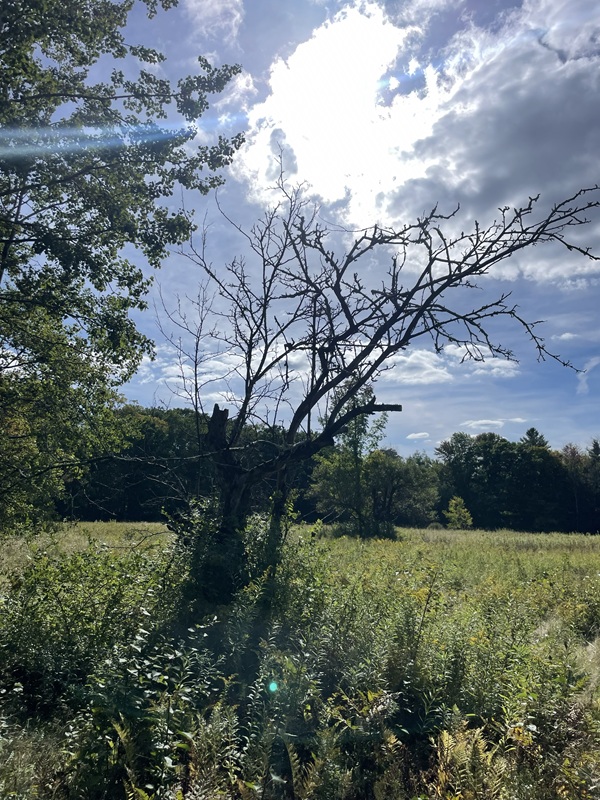
Finding a Wild Apple Tree Wild apple trees often do just fine on their own if left alone and given the right conditions, but they don't necessarily produce supermarket-approved apples. Pests and fungi will mark any fruit, but a wild apple tree's ability to thrive independently matters most and can depend on inherited disease susceptibility or resistance. Apple trees are heterozygous, meaning each seed possesses a random genetic combination of its two parents, like humans. It is very rare for a seed to produce an edible apple - they are usually a rollercoaster of undesired flavor and texture, hence the competitive world of intentional breeding. The chances of finding the next Honeycrisp growing wild from a seedling are very rare and the process requires a lot of lead time, so isolating parents with desired traits during pollination increases the chance of finding a money-making hit. So, if an apple core is tossed out the window - or recycled by wildlife - and one lucky seed happens to sprout in a high-elevation, cool climate like ours, and possesses the genes to withstand disease pressure, and produce some sort of human-edible apple, that seed has accomplished more than we could have encouraged it to with our assistance. These trees are all around us - you can spot them in the woods during heavy bloom years, like glowing pyres of white flowers surrounded by budding green forest. The tricky part can be determining if these are truly wild seedlings, or a long-lost but previously cultivated variety. Luckily, we are now able to submit samples for DNA testing and cross-check them with an existing database of thousands of known apple varieties. Of the twenty suspected wild trees we have tested at the Orchard over the last few years, twelve have been identified as genetically unique individuals, and a few of those are good eaters. If not truly wild, these trees usually turn out to be lesser known or older heirloom varieties - often hardy, reliable growers whose fruit was sometimes desired for functionality over flavor. (Imagine how much you might prize an apple for its ability to keep in a root cellar all winter in the days before refrigeration.) Our small on farm tree nursery holds replicated samples of these (via grafting), with the intention of having a small section of the orchard dedicated to local unique varieties. Our goal is to explore the endless genetic possibilities that apple trees are creating on their own, share them with you, and identify individuals that are better suited to our particular climate. An heirloom apple who's name you've never heard of just might be your new favorite, and it may even help growers adapt to ever-changing conditions. |
|
©The Sandisfield Times. All rights reserved.
Published October 1, 2026