| The Sandisfield Times |
|---|
| Sharing With Bears
Live Together, With Caution |
|
by Tom Christopher Published September 1, 2026 |
|
|
|
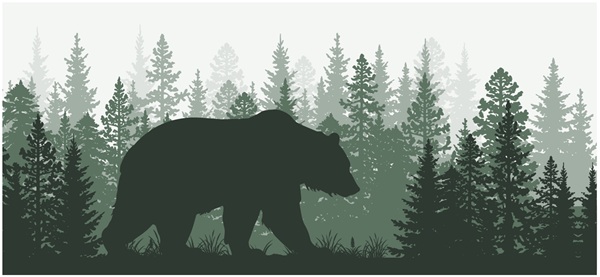
I've put away my .22 rifle - the cry in gardening circles these days is for "coexistence" with wildlife. That is an unquestionable benefit when coexistence consists of putting up bluebird boxes at the edge of your pasture or installing a fence around the vegetable garden so you don't have to channel Mr. McGregor when Peter Rabbit hops into your yard. It's more complicated when a black bear starts stopping by. That wasn't an issue before 1952 when the laws permitted shooting bears on sight in Massachusetts, and the total population consisted of few animals surviving in the remoter areas of the northwest corner. Then new laws were passed that restricted shooting bears to licensed hunters during a regulated hunting season. With that minimal help, this smart, adaptable species quickly rebounded so that today there are an estimated 4,000 to 5,000 black bears in Massachusetts, and their population is growing at 8 percent annually. Sandisfield is in the center of this revival, and it's not uncommon to see a black bear crossing one of our roads. It thrills me when I do because they are magnificent animals, and their renewed presence is evidence of how rapidly nature can recover from the damage we do to it. I experience mixed feelings, however, when I see them not infrequently crossing my lawn to check out the vegetable and fruit garden. Black bears are omnivores who rely on plants and fruits for 85 percent or more of their diet. They especially relish cherries; you'll notice that their scat consists mostly of pits when the fruits of our native black cherries ripen during late August to mid-September. Black bears are equally fond of domesticated cherries as I learned when my dwarf cherry tree fruited for the first time a couple of years ago. I thought the cherries would be ripe by the weekend, but a bear anticipated me by stripping the tree just a day or two before. I know it was a bear who did this because it left a pile of the pit-filled scat very close nearby. The cherry thief returned every 2-3 weeks for almost a year afterward to check if there was anything else ripening in my garden that suited its tastes. This illustrates a problem in bear/human coexistence: bears quickly learn where the calories are abundant, and once a bear identifies your yard, it will be back. Bird feeders are a notorious bear attracter, and to maintain one these days is, in my opinion, irresponsible. Once you teach a bear that human habitations are a good food source, that animal is headed for trouble, possibly even euthanization. I've enclosed my vegetable garden and orchard with a high-voltage electric fence whose design I took from a bee-keepers website. An easier solution for bird watchers is to replace the feeders with native berry and seed-bearing or caterpillar-hosting shrubs and trees. Massachusetts Audubon offers lists of regionally appropriate plants that feed birds at the Mass Audubon website. The National Wildlife Federation maintains a search engine for native plants. If you type in your Zip Code it will generate a list of plant species that host the most caterpillars in your area. Caterpillars are the key food most songbirds use to raise their chicks and an abundance in your yard will attract a wide variety of winging, feathered visitos. Poorly secured garbage is irresistible to bears. Like bird feeders garbage teaches them a reliance on human habitations as a food source. The state website, Mass.gov, offers advice on bear-proofing your garbage to Prevent conflicts with black bears. To put the danger posed by black bears into perspective, it's important to note that black bear attacks on people are exceedingly rare in the United States. On average, there are less than a dozen black bear attacks annually in the 40 states that these creatures share with people, with less than one resulting in a fatality. Compare that with the record of whitetail deer, which cause 1.5 to 2.1 million vehicular accidents annually in the United States, resulting in 26,000 to 59,000 injuries to people and 150 to 440 deaths. Do your part for coexistence with bears by keeping them wild. |
©The Sandisfield Times. All rights reserved.
Published September 1, 2026