| The Sandisfield Times |
|---|
| How One Town in Berkshire County Brought Its Tax Rate Down
Sandisfield Improved Its Financial Health and Reduced the Local Tax Burden. |
|
By Stephanie Zollshan, The Berkshire Eagle Reprinted with permission. |
|
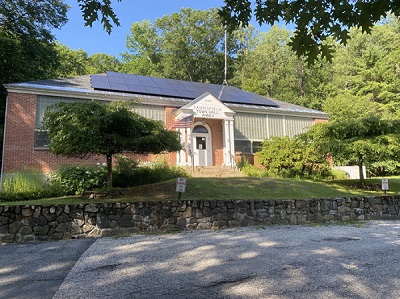 (Photo: Massachusetts Municipal Association.) |
|
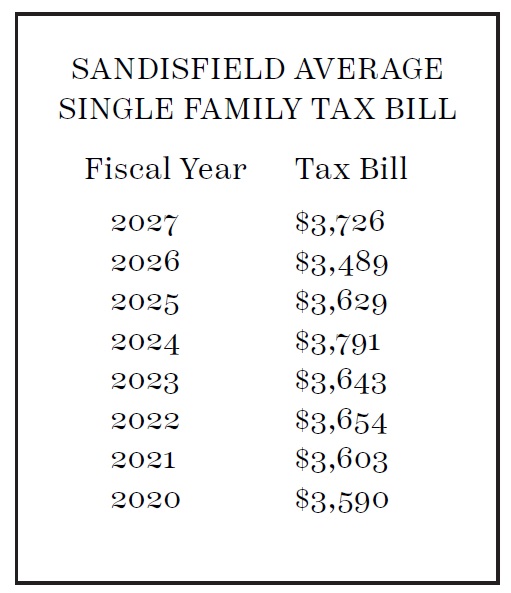
Eighteen Berkshire County towns saw average single-family tax bills rise by more than $1,000 between fiscal 2020 and 2026, with Great Barrington up more than $2,000, according to state data. In contrast, Sandisfield’s average tax bill fell during the same period. In fiscal 2020, the average single-family tax bill was $3,590 — six years later it dropped by $101. The estimate for fiscal 2027 is $3,726, an increase attributed to changes to the fire department. Town officials say the savings come from a series of changes that ranged from renegotiating a regional school district agreement and adopting a split tax rate to overhauling emergency service operations and finding efficiencies in day-to-day municipal spending. “We're really proud of where we're at and what we've been able to accomplish in the last couple of years,” Town Manager Janey Snyder said. The progress comes after a tumultuous period for the town that included public safety controversies, payroll fraud investigations, leadership disputes and a butt-dial lawsuit. Through the controversies, town officials have taken a closer look at how departments operated and where taxpayer dollars were being spent. School assessments are among the largest expenses facing any Berkshire County town, and one of Sandisfield's biggest savings came from renegotiating its regional school district agreement with Otis. “That was the angle — can we get them to understand that and give us a break,” Select Board Chair Steve Seddon said. “The leadership there was pretty hesitant initially. It's a big deal to try to change an agreement that was solid.” Sandisfield officials threatened to pull out of the district and send their students to other public schools if the amended agreement didn't pass. For fiscal 2026, the agreement raised Otis’ average single-family tax bill by about $36 per year while lowering Sandisfield’s by more than $300, saving the town about $318,300. “Ultimately, the School Committee was successful in renegotiating the RDA that got the assessment down,” Seddon said. “I think it was more that people were afraid of change, but they're good partners, they wanted to see it continue, so that was a big part of it.” The town also adopted a split tax rate beginning in fiscal 2025, shifting a greater share of the tax burden onto commercial and personal property owners while lowering it for residential taxpayers. “The idea was that by doing this, we lowered the cost for the senior population,” Seddon said. The change was not without consequences. The town's largest pipeline company saw its tax bill increase by more than $100,000, and other businesses also absorbed higher costs. The tradeoff is the reason some communities choose not to adopt a split rate. The town also found savings by restructuring municipal operations, particularly within its public safety departments and Department of Public Works.
After years of disputes and controversy involving the fire and police departments, the new fire chief, Michael Grillo — who has an ongoing personal tax fraud case in Connecticut — found ways to bring in missed income opportunities. One of the most significant changes came in the ambulance service. A revamped billing system recovered roughly $350,000 in revenue that had previously gone uncollected because of billing issues. The town also increased the number of non-emergency medical transports, creating an additional source of revenue while maintaining a 100 percent emergency response rate. Meanwhile, the Department of Public Works reduced costs by performing more maintenance in-house rather than relying on outside vendors. “Now we have a DPW super who's down there, and the guys are doing their own maintenance and upkeep, and it also gives you a better finger on the pulse of what your equipment's doing, so I think it's really a group effort of a lot of different people chipping in to work at all those different parts,” Seddon said. With those savings in place, Seddon said town staff pay has increased by more than 30 percent since 2021. “Everybody in Town Hall is paid more based on the realities,” he said. “It's not like we were taking money out of one person's pocket to make the budget lower; it was more that once you really dissected the budget, there were things that just didn't need to be in there, and there were efficiencies that weren't being sought after.” Those efficiencies included reevaluating contracts and vendor relationships rather than continuing to use outside services simply because the town had always used them. Officials acknowledge that major investments will still be needed in the coming years and that taxes are unlikely to remain flat forever. But they hope the changes made over the past several years will allow future increases to be more gradual and predictable. “It's just a group effort where everybody's just trying to find ways to be efficient now,” Seddon said. “We're just really lucky that we have that dynamic in town, and I'm looking forward to staying on the path that we are. I’m anticipating that eventually we will see more of an increase, just as nothing's getting cheaper, unfortunately.” |

|
©The Sandisfield Times. All rights reserved.
Published August 1, 2026