| The Sandisfield Times |
|---|
| The Watering Hole |
|
by Brigitte Ruthman Published June 1, 2026 |
|
|
|
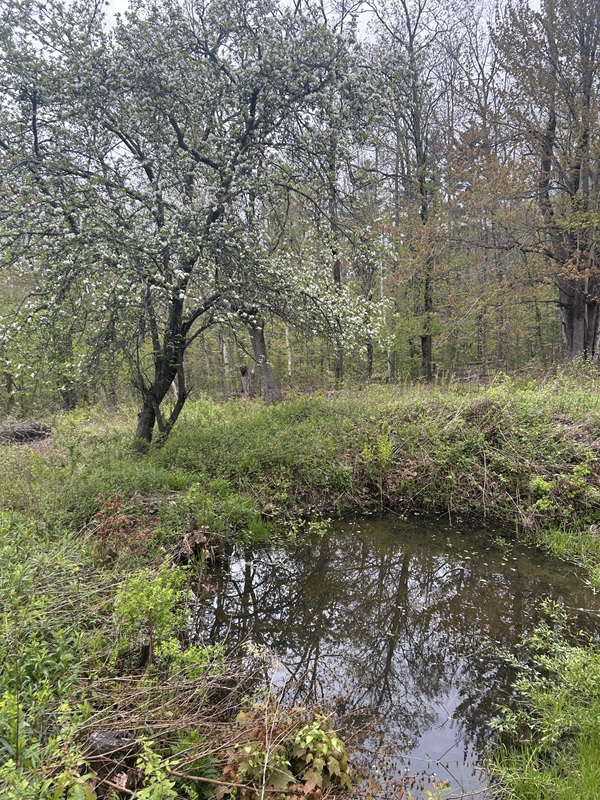
Salamanders, tree frogs, and spring peepers live here, where cows come down in single file to drink. The cows lean against the muddy slope to dip their noses in the gathered rainwater, warmer and more tannin sour than spring water. They slurp loudly. The 20-foot diameter trough isn't a natural feature in the lower southwest corner of the pasture where it dips down to the road. It was dug there many years ago to collect the runoff from storms in rivulets and little streams that run into it. It reminds of ingenious farmers, lacking the option of Rubbermaid containers from a Tractor Supply store, who engineered essential watering systems. At Thomas Jefferson's Monticello, cisterns connected to roofs provided water at high ground, except during drought when it had to be hauled. Throughout New England, fences were extended where they could to include steams, springs, and other water sources. In winter, ice was cracked every morning near the barn and cows were "watered" just twice daily. As at Monticello, the high ground here was a dilemma for farmers Joshua Smith and Thomas Dodd, whose ancient fence lines still wind through the lower woods. The watering hole they dug and maintained had been here all along, hidden for years in a thicket of multiflora rose, Viburnum, and birch trees. An apple tree grows over it, its gnarly limbs decorated now in blossoms. The cows prefer it over the Rubbermaid. |

|
©The Sandisfield Times. All rights reserved.
Published June 1, 2026