| The Sandisfield Times |
|---|
| Getting a Room at the Pinsky's |
|
by Val Coleman Published July 1, 2010 |
|
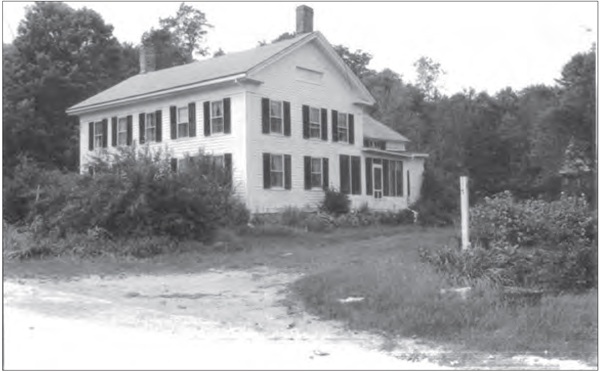 (Photo: Richard Migot.) |
|
Libby Schnovsky Pinsky was slightly deaf...and a good thing too...each summer her home in Sandisfield was filled with a hullabaloo of kids and their parents who came up from the Bronx and Brooklyn slums to "board" or "room" in the big white house at 6 Silverbrook Road. A summer "boarder" was fed three meals a day and a "roomer" had their own special space on the black iron woodstove and in the ice box (or "refrigerator" depending on what year you're talking about.) "There were kids and chickens all over the place," said Anne Pinsky Hoffman and her husband Phil, sitting in the living room of the copy of their old house, an almost identical building constructed this year on the same site...right up the road from the Sandisfield Town Hall. The old house, with all its echoes, built in 1799, burned to the ground mysteriously in February of 2008. Anne's mother, Libby, and her husband David Pinsky, who organized the boarding house in 1922, were prominent members of Sandisfield's Jewish community which had been founded after the First World War by the philanthropy of Baron Maurice de Hirsch who financed the migration of European Jews to America to escape the pogroms and start anew as small agricultural communities. During the early 20th Century there were many boarding and rooming houses in the Berkshires. But there was something special about the house at 6 Silverbrook Road...it was, among many other things, a dairy farm. Ten milk cows ambled next to the house, and a garden of potatoes, carrots and beans and dozens of chickens provided much of the food cooked on the old black stove. The leftover milk was sold to the Borden Company's outlet in Otis. But more important, it was a place born of compassion (the Yiddish word is rachmunis) created as an alternative to the demoralizing slums of New York where the elder Pinskys originally had settled from Russia. Getting a room at the Pinskys in Sandisfield was a big deal. A letter of application had to be written and approved and a square spot on the stove reserved. Libby Pinsky and her children read and answered the letters (some of which required translation from Yiddish) and braced themselves in the Spring for the invasion. The old house had 13 rooms and as many as 10 families would come up from New York each summer. The husbands stayed in the city to work during the week. For almost forty years, the place rang with children's voices. Picnics and baseball, swimming and singing, replaced the gloom and heartache of the slums for three precious months. A typical summer day would end up in the Montville dance hall (long since demolished) with a rousing square dance, music provided by players from all the nearby towns. The local entrepreneur was Abe Baranoff, who saw to it that the square dances went long into the night, usually ending with what Anne called "grand parties, great fun and endless laughter." During the day, the boarders and roomers shared the chores of the farm with the Pinsky family. And although this was a summer vacation for the children, those who were having difficulty at school back in New York took special remedial classes. Everyone had something to contribute; actors and musicians put on small musicals and one act plays, and the weekends were especially exciting when the husbands came up from the city to join their families. Summer in the old house at 6 Silverbrook Road in Sandisfield, Massachusetts from 1922 until the early 1960s was a liberating American moment that should never be forgotten. Even when the "boarding" and "rooming" ended in the 1960s, the old house remained a gathering place for New York families, many of them artists and academics...some of them veterans of the civil rights movement. Many of the families who came to Sandisfield to live at the old house in the summertime stayed and still prosper here. The Dryanskys and Levines and Marilyn Gore, for example, still members of the Sandisfield community, are veterans of Silverbrook Road. Anne Hoffman, who grew up in the old house with four brothers and a sister, decided, in 1985, to write a book. She called it "Sandisfield, Biography of a Town". |
©The Sandisfield Times. All rights reserved.
Published July 1, 2010