| The Sandisfield Times |
|---|
| The Bleak Winter
Historic Sandisfield Farm Buildings Come Down |
|
by Ron Bernard Published January 15, 2026 |
|
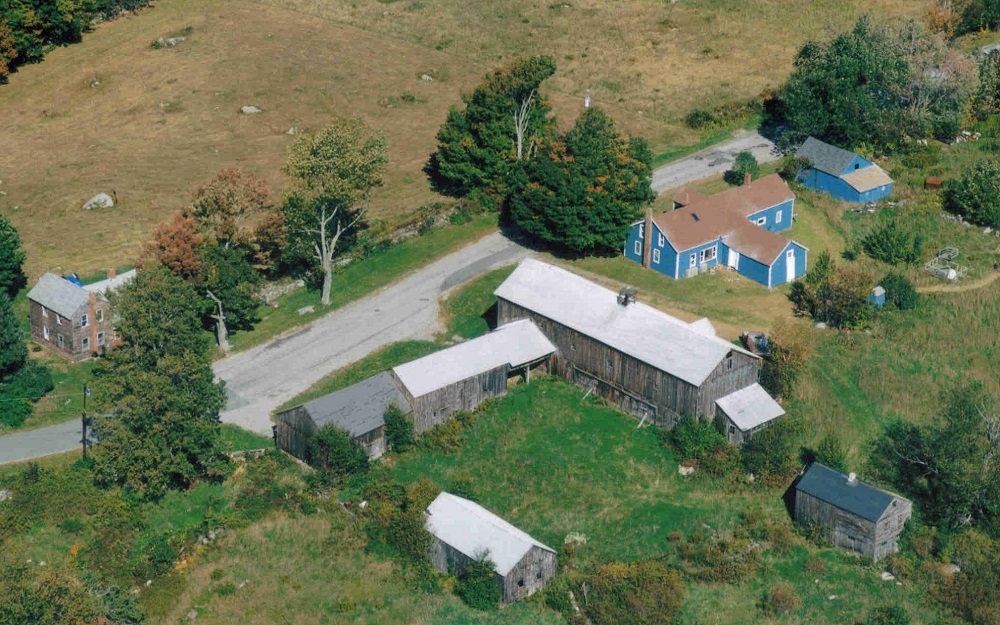 1999 aerial view of intact Rowley Farm compound, Cold Spring Road. (Photo: Rowley family.) |
|
Overcast skies and damp, freezing conditions prevailed in the first days of 2026 when a dinosaur-like excavator chomped its way through four venerable if dilapidated buildings, all survivors of the former Adams-Hawley-Rowley farm and mill on Cold Spring Road in the Beech Plain section. The 900-acre property, along the shores of Lower Spectacle Pond, was "taken" by the Commonwealth by eminent domain in 2007 and incorporated into Otis State Forest for the purposes of preservation and public use. In this heritage-rich state, the place was remarkably significant in Massachusetts history for several reasons, but one in particular. It may have been the longest continuously operated farm under the same family ownership - 1760s-1970s.
|
|
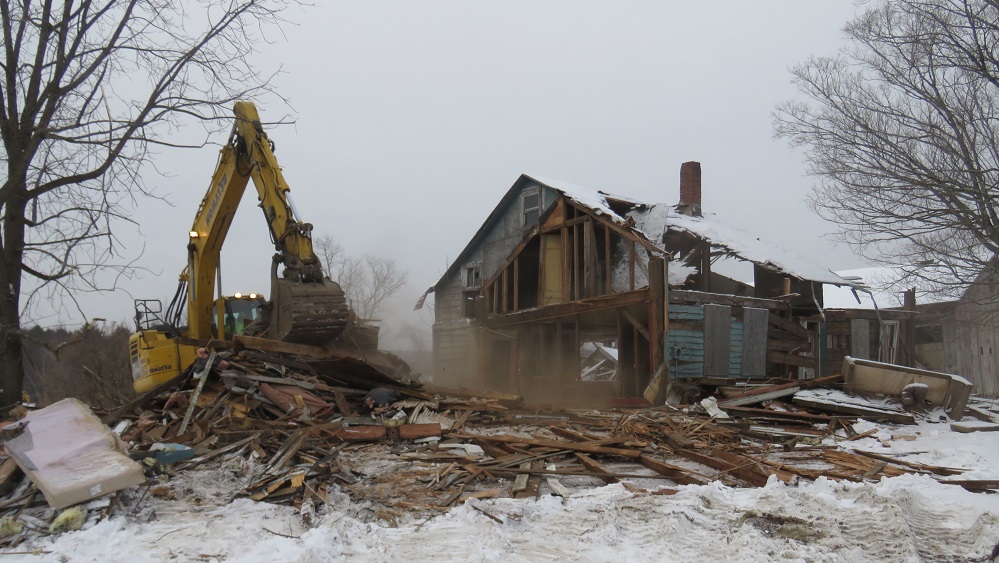 January 6, 2026. Original farmhouse under demolition. (Photo: Ron Bernard.)
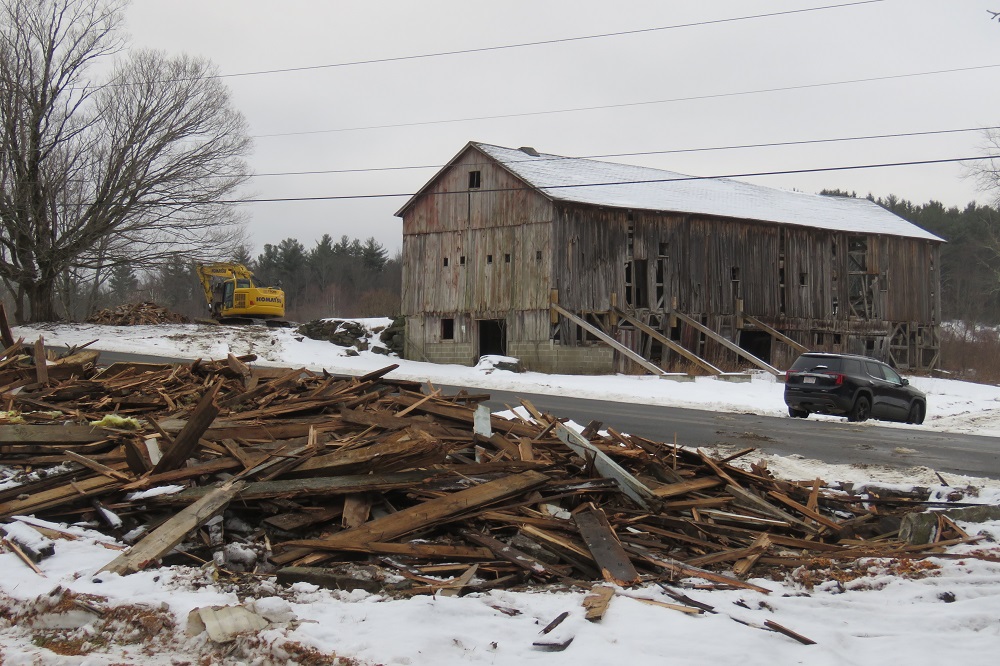 View of 18th century English-style barn from the ruins of the Rowley house. (Photo: Ron Bernard.) |
|
The Buildings Come Down The centerpieces of a group of surviving buildings included a farmhouse and a section of an English-style barn, both pre-Revolution. Another house across the road and two utility buildings were early-to-mid-19th century vintage. Also, there is an abattoir (slaughterhouse), c.1820s. Several 20th century summer cabins on the pond also survive albeit in ramshackle condition. Ultimately only the abattoir will remain. The dreary atmosphere of January 6-7 seemed appropriate for the unceremonious fate of this beloved Sandisfield heritage, due to likely unavoidable decisions by the Mass. Department of Conservation and Recreation (DCR). The crew hired to demolish the first group of structures were aware of the significance of the moment and went about their tasks somberly. A DCR representative and observer remarked to a reporter that being the last person to stand in the oldest house on the property was a moving experience. "A hard day," he said. |
|
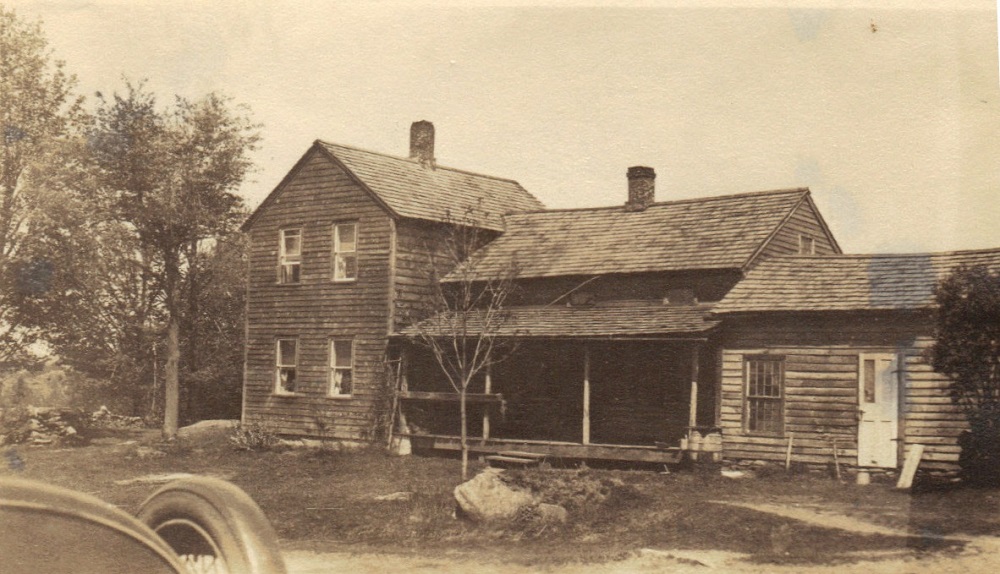
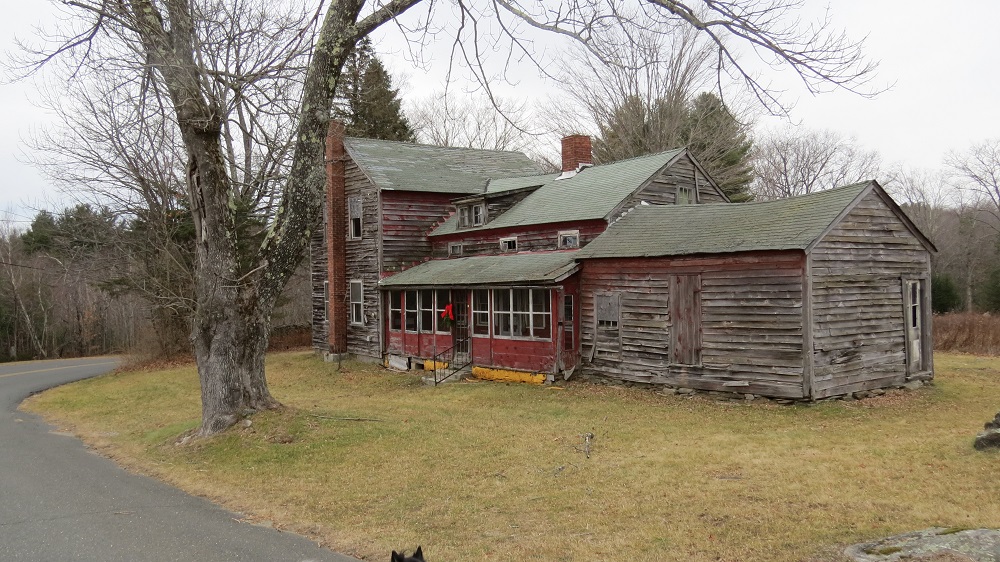 The Rowley house, across the road, as it appeared in 2015. (Photo: Ron Bernard.) |
|
Opposing Plans Matriarch Ruth Snow Rowley was the last family member to reside on the property. She died in 2004 at age 93. Her descendants had dramatically different ideas about what should be done with the place, ranging from preservation to development. After a builder stepped in with approved plans for modern upscale houses around the pond, the State, with consent of the Sandisfield Select Board (a two-to-one vote) moved to purchase the estate. By then, except for Mrs. Rowley's house, none of the buildings had been in service or maintained since the family concluded its sawmill operations almost thirty years before.
DCR understood the historic significance of the farm, a superb, authentic example of 19th century agricultural tradition in New England. The estate was also said to be the most environmentally important, unspoiled large tract of land in Massachusetts and a rare opportunity for the state. What to do with the farmstead was the subject of debate in the DCR for years. One idea was to lease the land and useable buildings to an on-site caretaker for small-scale farming. The Rowley house was considered as a potential local DCR office. The English-style barn, one of the last of its kind, also had educational potential. Several years ago, the failing roof was patched up and the sagging west wall braced while alternatives were evaluated. Ultimately it was decided that all but one building was beyond salvage, and that included the barn. |

|
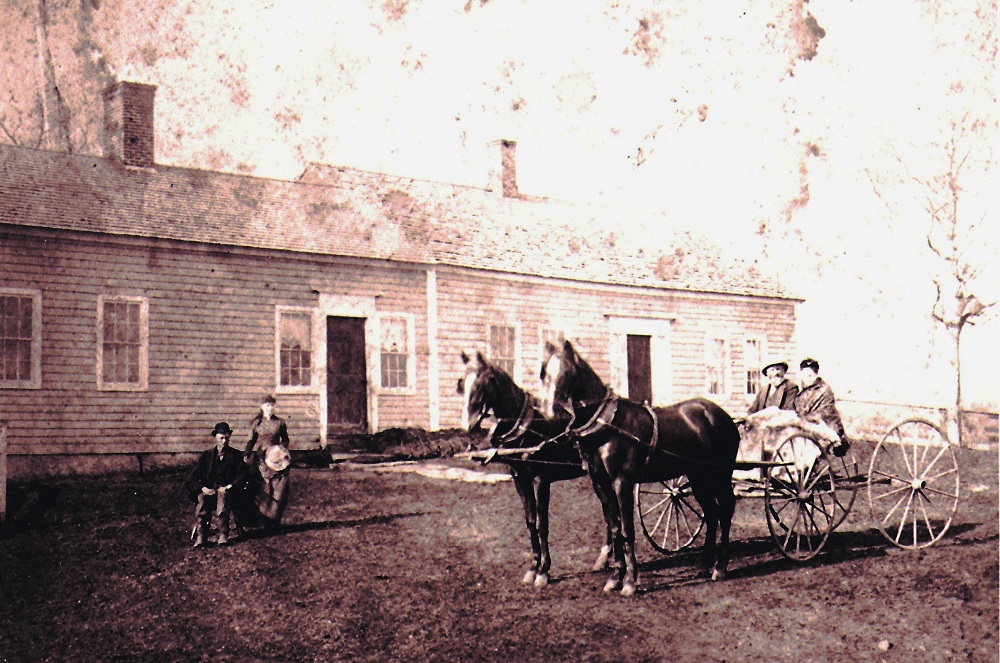 The original late-18th century farmhouse, 1890. (Photo: Rowley Family.)
|
|
One Family, 200 Years The Richard Adams family of Connecticut pioneered the Beech Plain section in the 1760s. They operated the first mill in the area, on the Clam River near the Lower Spectacle Pond outlet. In 1855, William Hawley of Dalton acquired 200 acres of established farmland and buildings from his brother-in-law, Harry G. Adams. He was the great-grandson of Richard and husband of Lucy Hawley, William's sister. Harry died a few months later, only 37. Hawley expanded the farm and established a very productive sawmill (200,000 board feet in 1886). William's granddaughter, Ada Hawley married Alford Rowley of Tolland in 1908. After William Hawley died in 1909, the family enterprise continued into the 1970s as Rowley Bros. Farm & Saw Mill, Inc. A long-time resident of nearby West Otis, Nancy Rowley Loring grew up on the farm and attended the one-room grade school on Cold Spring Road. When asked by The Times for her thoughts and reflections about the demolition, she said, "I went over there. I had to see it. We knew this day was coming... it was inevitable, I guess. There are no words to express how I feel." |
|
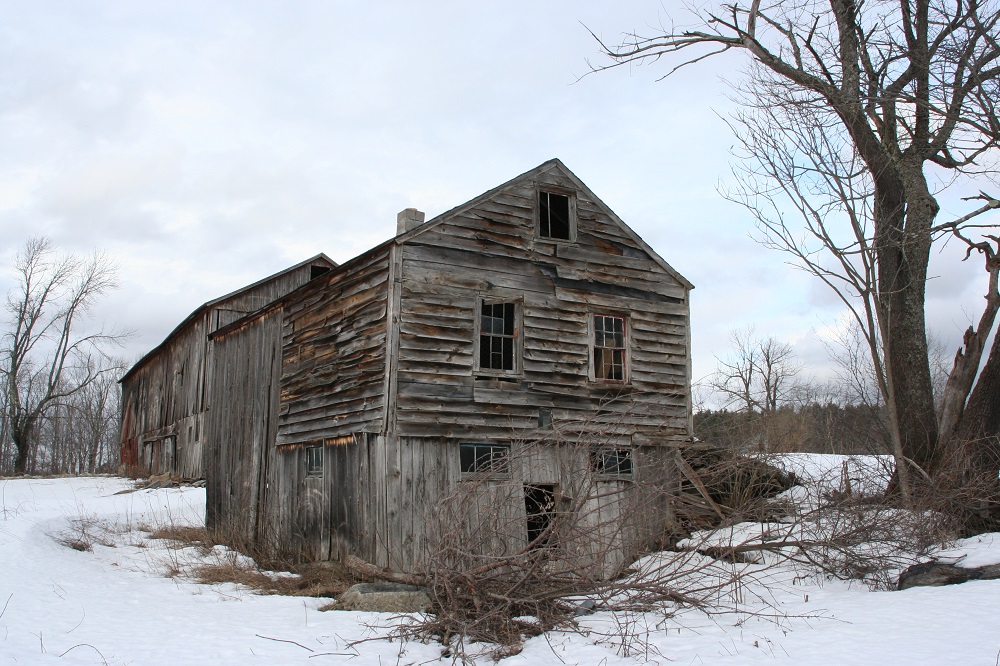 The abattoir, 2011 (Photo: Larry Dwyer.)
|
|
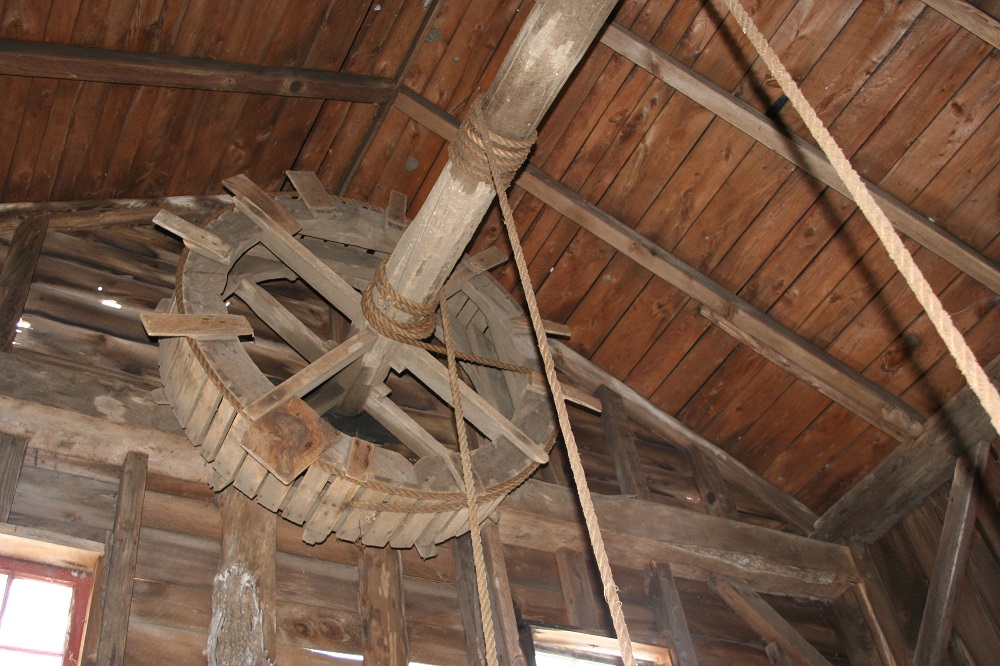
Goodbye to What Was Here Much time and attention were paid to saving the great barn, but DCR structural consultants ultimately advised against it. Soon it will also come down along with the summer cabins leaving only the abattoir. Considered a unique example of an early-19th century Massachusetts slaughterhouse, the abattoir was recently restored by the DCR. The project incorporated siding and other fabric salvaged from the original house. The building stands both as a tangible witness and educational resource to inform future generations about a much different way of life here long ago and the extraordinary family at this place. A tip of the hat to the DCR which recognized the significance of the abattoir, probably the last of its kind, and made it a priority for preservation. Additional fabric from the original house and certain interior features like a mantel were saved. Also, the barn is thought to have a considerable amount of reuseable material so the demolition and salvage will proceed carefully. Material will be stored in expectation of restoration projects at other DCR properties around the state. The granite sills of the foundations of the major buildings will be saved in place. An historical display in the abattoir about the long history of the farm is under consideration. |
|
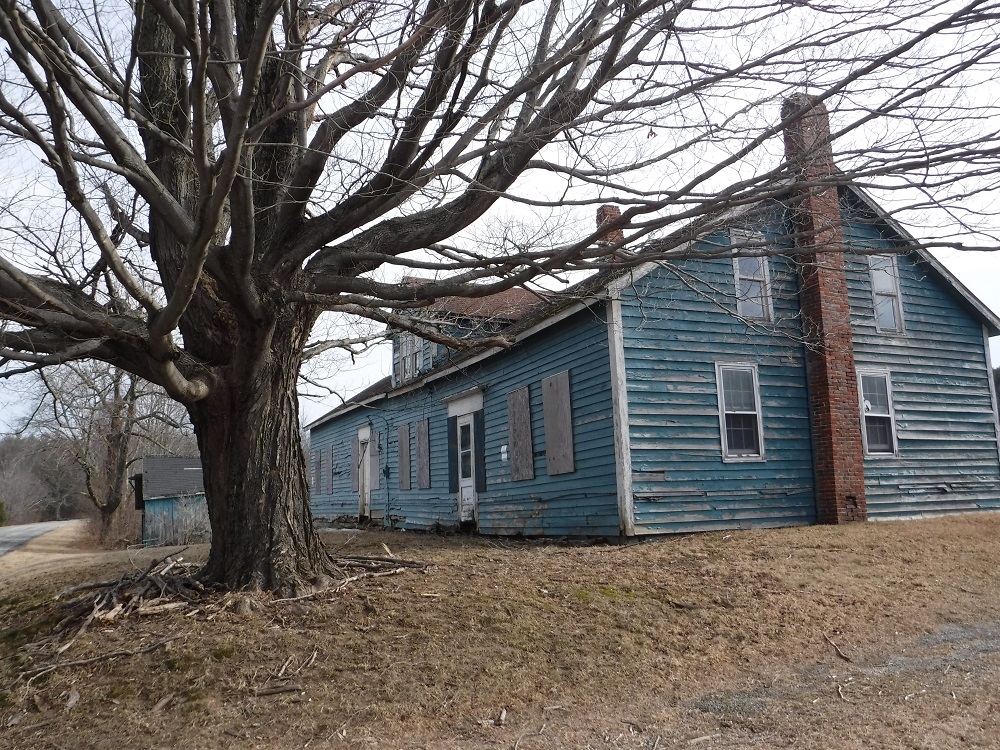 The Rowley house, 2011. (Photo: Larry Dwyer.) |
©The Sandisfield Times. All rights reserved.
Published January 15, 2026